V Pillow with Removable Cover: What Matters Most
Last updated: November 19, 2026
A removable cover is usually the better choice if comfort and hygiene both matter, because it lets you wash the outer layer often without throwing the whole V pillow into the laundry. It is not the right pick for every sleeper, though. If the zip feels rough, the fabric pills fast, or the inner shape shifts after washing, the trade-off can cancel out the benefit.
Key takeaways
- A washable outer layer is the main hygiene advantage, not a guarantee of cleanliness.
- The zip, seam, and fabric weight matter as much as the filling.
- Removable covers suit people who sweat, shed skin, or use the same V pillow every night.
- Fixed covers can feel simpler, but they are harder to keep fresh.
- The best choice depends on whether you value easy washing more than a slightly cleaner-looking finish.
A bedding writer who follows care labels and textile standards can tell you this much: with V-shaped support, the cover does more than hide the filling. It affects how soft the surface feels, how warm the pillow sleeps, and how often you can clean it without damage.
What does a removable cover actually change?
A removable cover changes two things: how the surface feels and how easy the item is to clean. That is the whole point of the design. The inner V-shaped core stays in place while the outer layer comes off for washing, which makes routine care far easier than cleaning a one-piece unit.
The comfort side is real, but simple. A cover can soften a firmer filling, reduce scratchy contact at the neck, and make the first touch less stiff. A zippered layer also gives the maker room to use a different fabric on the outside, such as a smoother knit or a cooler woven textile.
The hygiene side matters more. Skin oils, sweat, drool, dust, and hair all land on the outer surface first. If that layer can be removed, washed, and dried properly, the pillow stays fresher between deeper cleans. That matters for people who use a V pillow daily, not just for decoration.
A removable cover is still not magic. If the cover is thin, the filling may show through or feel lumpy. If the zip sits poorly, it can press against the jaw or collarbone. A cover that meets a textile standard such as OEKO-TEX Standard 100 can be a better sign than a flashy fabric claim, because it at least addresses harmful substances in the finished textile.
Is a removable cover better for hygiene?
Yes, a removable cover is better for hygiene because it can be washed on a regular schedule, while a fixed cover often turns cleaning into a bigger job. That is the practical answer most readers need.
The CDC’s general laundry guidance and NHS advice on cleaning bedding both point in the same direction: routine washing matters more than occasional deep cleaning. A removable layer makes that routine realistic. It is easier to wash a zippered outer shell every time it starts to feel stale than to wrestle with a full V-shaped cushion that may not dry evenly.
That said, hygiene depends on the whole setup. A washable cover helps only if the fabric, zip, and seams survive the wash. If the maker does not state washing instructions clearly, or if the filling cannot handle moisture, the user may end up avoiding the wash cycle because of fear of damage. In that case, the hygiene benefit drops fast.
This is why a removable cover is strongest for everyday use. If the pillow sits on a bed as a support item for reading, recovery, or side support, the surface picks up more body contact than a decorative cushion. A washable shell is the sensible choice there. It is less compelling for a guest room item used once in a while.
Comfort: what changes, and what does not?
A removable cover can improve comfort, but it does not fix a bad shape. The V design itself controls support; the cover mainly changes surface feel, temperature, and pressure points.
A soft outer layer can reduce friction against the neck and cheek. A slightly thicker fabric can make the support feel less firm at first contact, which some readers prefer when resting in bed or propping up during reading. A smoother weave may also feel cooler than a heavy fleece-style layer, although that depends on the material more than the zip.
The downside is easy to miss. A cover that fits too tightly can pull the shape inward and make the V pillow feel smaller. A loose one can wrinkle and bunch under the jaw or shoulder. Both problems make the support feel less precise, which defeats part of the reason people buy a V-shaped design in the first place.
A comfort-first buyer should look for a cover that keeps its fit after washing and still closes neatly at the seam. If the listing gives no details beyond “removable,” that is a weak sign. A good removable cover should say more than that, ideally including the fabric type and a clear care method such as machine wash on a gentle cycle.
Removable cover or fixed cover: which wins where?
A removable cover wins for most daily users, while a fixed cover only wins when simplicity matters more than washability. The difference shows up in cleaning, heat, and long-term upkeep.
| Criteria | Removable cover | Fixed cover | Winner for [condition] |
|---|---|---|---|
| Cleaning routine | Outer layer can be taken off and washed separately | Whole pillow must be cleaned as one piece | Removable cover for frequent use |
| Drying time | Usually easier to dry the outer layer fully | Bulkier item takes longer to dry | Removable cover for damp climates |
| Surface freshness | Easier to refresh after sweat or drool | Stains and odors build up faster | Removable cover for nightly use |
| Comfort feel | Can be softer or cooler if fabric is chosen well | Fewer seams, less zip contact | Fixed cover for zip-sensitive sleepers |
| Shape retention | Depends on fit and closure quality | Often simpler shape, fewer moving parts | Fixed cover for people who hate wrinkling |
| Maintenance effort | More steps, but easier washing | Fewer parts, harder cleaning | Removable cover for hygiene-first buyers |
| Risk of irritation | Zip and seam can press if badly made | Fewer hardware points against skin | Fixed cover for very sensitive skin |
| Replacement flexibility | Outer layer can sometimes be replaced sooner | Whole item wears as one unit | Removable cover for long-term upkeep |
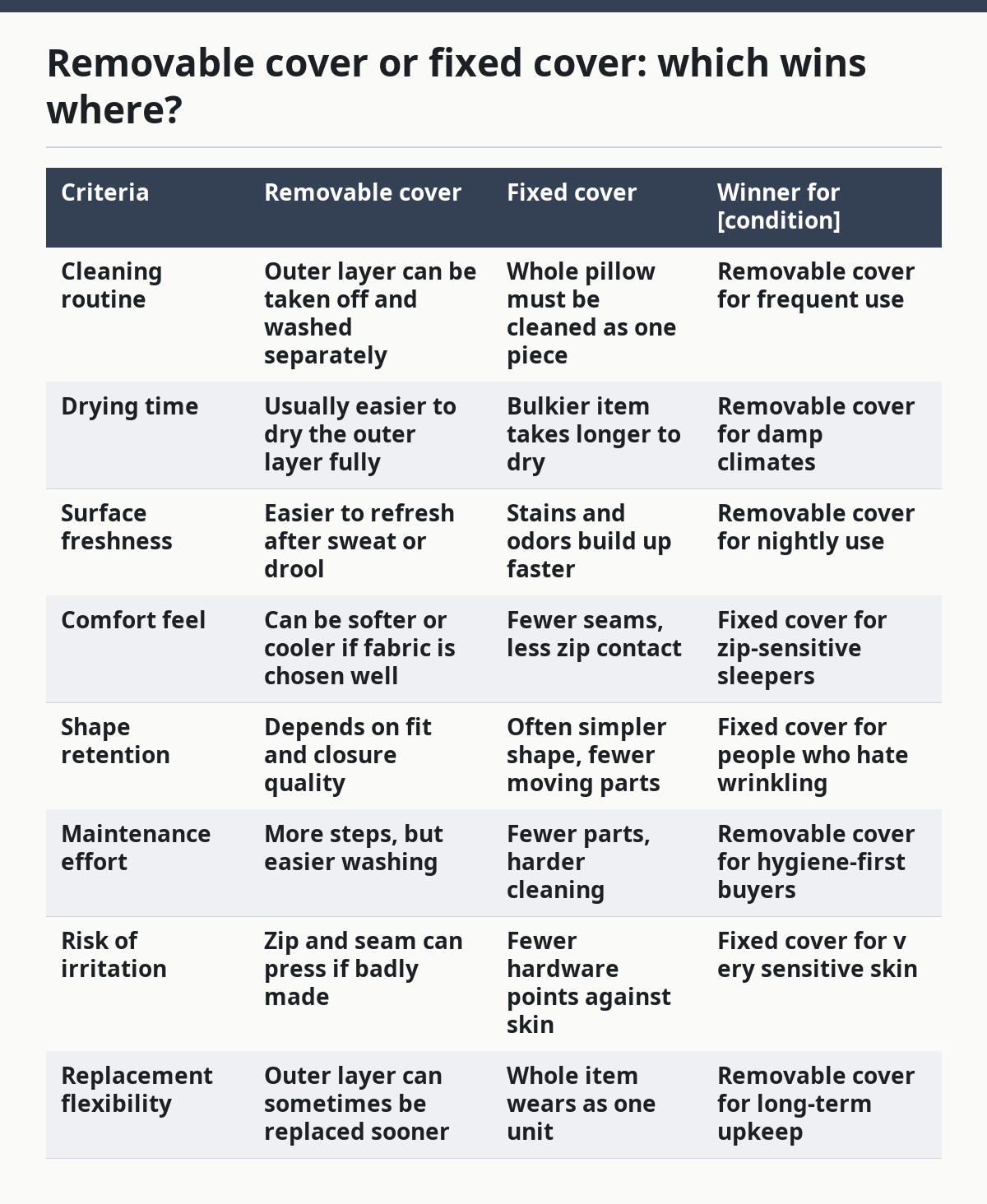
The table shows the core trade-off plainly: the removable version asks for a little more attention, but it pays back in easier cleaning. The fixed version asks for less thinking on day one, then becomes harder to keep fresh later.
This matters most if the V pillow is used the way many people actually use it: on a bed, every night, close to skin and hair. In that setting, the removable design is the practical winner. A fixed shell is mainly for people who dislike zips, prefer a simpler feel, or use the pillow only now and then.
Who should actually buy one?
A removable cover is best for anyone who wants a V pillow for regular sleep, reading, pregnancy support, recovery support, or long bed rest. Those users benefit most because the outer layer takes the most wear and the most sweat.
It is also the smarter pick for people who are careful about allergens, dust, or odor build-up. A washable cover does not solve every sensitivity issue, but it gives you a real cleaning routine. Textile standards such as OEKO-TEX Standard 100 can be useful here because they signal that the fabric has been checked for certain harmful substances, which adds another layer of reassurance.
This choice is not ideal for everyone. If you hate zippers, sleep very lightly, or find textured seams distracting, a removable cover may annoy you. It is also not the best option if the product listing is vague about washing instructions, because vague care advice usually means more hassle later.
A buyer in a warm bedroom or a humid climate gets the most benefit from the removable design. Heat and moisture make the surface age faster, and washing becomes part of normal upkeep. If the pillow is only an occasional prop, the convenience gap narrows.
When should you skip it?
Skip a removable cover if the zip, seam, or fabric makes the pillow less comfortable than a fixed one. Hygiene only helps if you can actually use the thing without noticing the hardware every night.
There are also cases where the inner filling matters more than the cover. If the V shape collapses, feels too stiff, or traps heat, a washable shell will not rescue it. The support core has to work first. A clean cover on a poor inner shape is still a poor pillow.
Another reason to skip it is poor product labeling. If the listing does not clearly state whether the cover is machine washable, whether the inner cushion can be washed, or how the item should be dried, the design loses a lot of its value. A removable cover should make care clearer, not more confusing.
This is where many generic articles get it wrong. They treat “removable” as an automatic win. It is not. The feature only matters when the closure is well made, the fit is right, and the care instructions are specific enough to follow.
What should I check before buying?
Check three things first: the closure, the care label, and the fabric standard. Those details tell you more than marketing words like “soft” or “premium.”
The closure should lie flat and stay smooth against the skin. The care label should say whether the outer layer can be machine washed and whether the inner shape can be cleaned at all. If the listing mentions a standard such as OEKO-TEX Standard 100, that is a useful signal that the textile has been checked for certain harmful substances.
Also check where the item is sold. A V pillow with a removable cover is often listed at more than one retailer, so compare the brand site, Amazon, and other major sellers before deciding. That gives you a better sense of the current price and the available care details without locking you into one store.
The most useful question is simple: will this still be easy to live with after six months? If the answer is yes because the cover is washable, the zip is hidden, and the fabric fits your skin, then the feature is doing its job.
FAQ: related questions readers ask
Can I wash the removable cover every week?
Yes, if the care label allows it and the fabric holds up well after repeated washing. Weekly washing is often sensible for a cover that gets skin contact, sweat, or drool, but the exact schedule depends on use and the maker’s instructions. If the label is unclear, that is a warning sign.
Does a removable cover make a V pillow more comfortable?
Yes, it can make the surface more comfortable by changing the feel against the skin. The cover can soften a firmer core, reduce friction, and make the pillow feel less harsh at first touch. It will not fix a bad shape or weak filling, though.
Is a fixed cover ever better?
Yes, a fixed cover can be better if you hate zips, want fewer seams, or prefer a simpler feel. It can also work well for light use where frequent washing is less important. The trade-off is that cleaning becomes harder and less practical.
What fabric should I look for?
Look for a fabric that feels comfortable on bare skin and is clearly labeled for care, with a standard such as OEKO-TEX Standard 100 if available. The best fabric is the one you can wash as directed and still want to use every night. If the listing avoids specifics, keep looking.
Does the removable cover help with allergies?
It can help by making regular washing easier, which may reduce dust and buildup on the surface. It does not replace good bedding care or solve every allergy problem. If allergies are a major concern, a clinician or pharmacist can help you judge what level of bedding care makes sense.
Drafted with AI; not yet reviewed by a person.
About the Author