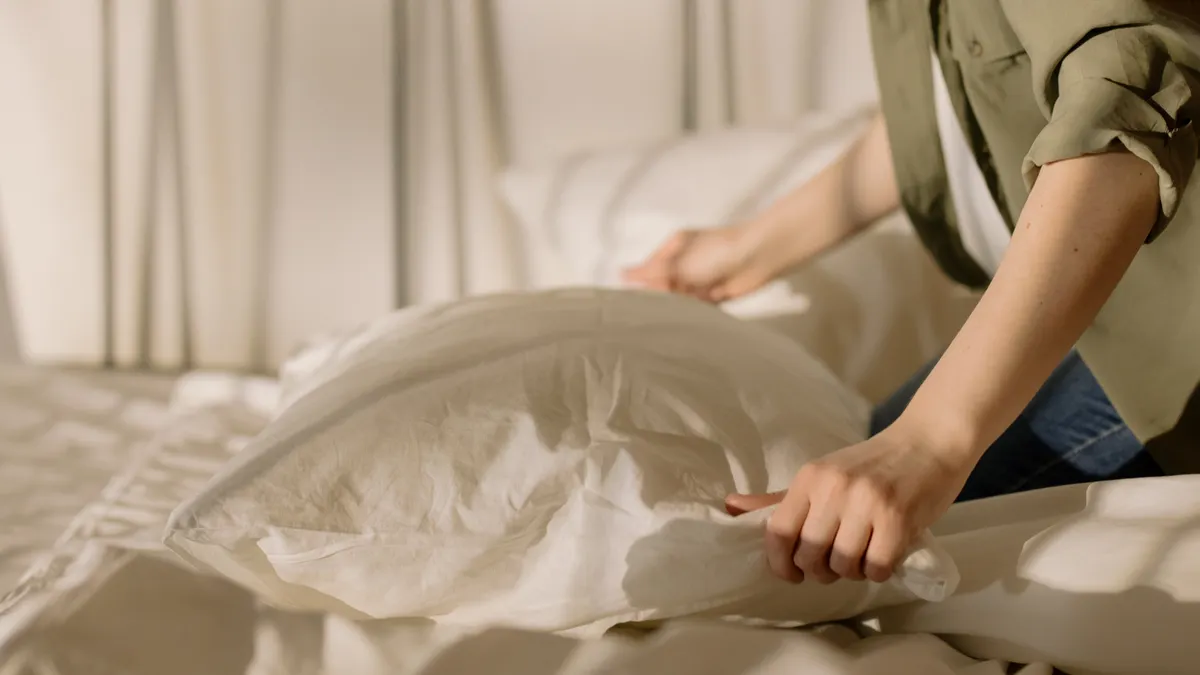
person smoothing a white pillow cover on a bed
Last updated: November 18, 2026
Quick answer: use 4 steps. For Pillow cover care and storage systems — The Complete Guide, wash by fabric, dry fully, fold flat, and store in a cool, dry bin or drawer. Pillow covers get grimy fast, wrinkle easily, and lose shape in storage if you treat them like spare sheets. The steps below settle how to clean different fabrics, how to pack them for the season, and how to stop yellowing, mildew, and moth damage.
The fastest way to keep pillow covers clean and ready
Clean covers stay useful when the care plan matches the fabric and the storage system matches the space. A cotton cover can take a hotter wash than silk or wool, but the wrong fold or a damp storage bin will still ruin it in one season.
The right system is simple: sort by material, wash before storage, dry completely, and keep them out of heat, light, and moisture.
Because of that, the simplest care system often lasts the longest.
Key takeaways
- Sort first, wash second. Fabric type decides water temperature, detergent, and drying method.
- Store only bone-dry covers. Even a little trapped moisture can lead to musty odor or mildew.
- Use flat storage for delicate fabrics. Silk, linen, and embroidered covers keep their shape better when folded with tissue.
- Vacuum bags are not the default. They can crush trims, crease fabric, and trap odor if the cover was not fully dry.
- Rotate seasonally. Keep everyday covers near the front and off-season sets in labeled bins or drawers.
What fabric is the cover made of in Pillow cover care and storage systems — The Complete Guide?
Fabric decides almost everything: water temperature, agitation, drying heat, and whether the cover can be ironed. Cotton is the easiest; silk, velvet, and wool need more care. The wrong wash cycle can shrink a cover in one cycle or flatten texture for good.
Start by reading the sewn-in care label. If the label is missing, treat the item as delicate and use the gentlest safe method; if you are unsure, consult a professional cleaner or the manufacturer, and follow care-label guidance such as FTC textile care labeling rules.
No guessing.
- Cotton and cotton blends: usually machine washable on a gentle or normal cycle.
- Linen: handle with cool or lukewarm water and low heat.
- Silk: hand wash or use a silk-safe cycle if the label allows it.
- Velvet and wool: often need spot cleaning or professional care.
- Embroidered or beaded covers: turn inside out and protect trim in a mesh bag.
The safe-care ladder, from easiest to most cautious
- Check the label before anything else.
- Close zippers or buttons.
- Turn the cover inside out if it has prints, embroidery, or a nap.
- Use mild detergent.
- Choose the lowest heat that will still dry the fabric fully.
- Press or steam only if the label allows it.
If the label says dry clean only, do not improvise with hot water and a dryer. The risk of shrinkage is real, and professional cleaning is often the safer choice.
How should you wash pillow covers?
Wash them gently, in cold or lukewarm water, with a mild detergent, then dry them fully before storage. That is the basic answer for most home use. The details change with fabric, but the goal never does: remove body oils, sweat, dust, and skin flakes without stressing the fibers.
A pillow cover that sits on a sofa or bed collects more than visible dirt. It also traps oils that can yellow light fabrics over time.
That stain is slow.
Washing rules that prevent damage
- Use mild detergent and skip heavy bleach unless the care label explicitly allows it.
- Choose a gentle cycle for most decorative covers.
- Wash similar colors together, especially dark dyes that can bleed.
- Use a mesh bag for thin fabrics, tassels, or trims.
- Rinse well; detergent left in the weave can make fabric feel stiff.
For cotton, a normal household washer usually works fine. For silk or wool, hand washing in cool water is safer, but the process must still be thorough enough to remove soap.
Half-clean is not clean.
Drying: where most mistakes happen
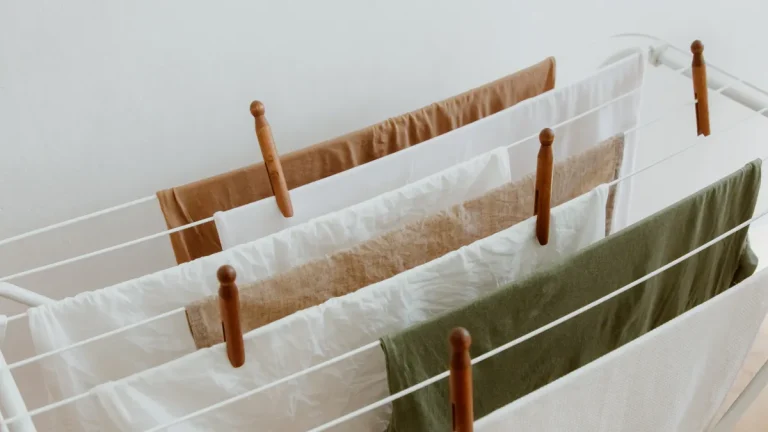
Drying matters as much as washing. A cover that looks dry on the outside can still hold moisture at seams, welts, or embroidery. Put damp fabric into storage and you invite mildew.
- Air-dry delicate covers flat on a clean rack.
- Use the lowest dryer setting only if the label allows machine drying.
- Remove covers while slightly damp if you plan to press them.
- Never pack covers that feel cool, heavy, or musty.
If you need a quick freshness reset between washes, a fabric brush and a short airing-out in a shaded room often beats another wash. That protects fibers and saves time.
For example, a 10-minute air-out can be enough to reduce trapped room odor in a dry space.
How do you fold and store covers without creases?

Fold covers flat, stack them by fabric or season, and keep the stack inside a breathable container or a drawer with enough room to avoid crushing. The best storage approach is the one that keeps the fabric dry, visible, and easy to reach in under a minute.
The goal is not just neatness. It is preserving the shape, texture, and scent of the fabric until the next use.
Flat beats stuffed.
Best storage options by use case
- Drawer storage: best for everyday cotton or linen covers.
- Labeled lidded bins: best for seasonal rotation and guest-room sets.
- Fabric storage boxes: good for delicate or decorative covers.
- Shelf stacks with acid-free tissue: useful for silk, wool, and embroidered pieces.
- Closet hanging: only for special covers that wrinkle badly, and only if they are protected from dust.
Avoid random mixed piles. One rough fabric can snag another, and a dark cover pressed against a light one can transfer lint or dye residue. In practice, a short 3-step fold is usually enough for most covers.
Folding method that actually works
- Lay the cover flat on a clean surface.
- Smooth out air and seams.
- Fold once or twice, depending on size.
- Place acid-free tissue between delicate layers if needed.
- Store by size or room so you can find the right one fast.
If you keep sets together, tuck the matching cover into one of the spare covers from the same set. That trick saves hunting later and keeps each group together.
Very practical.
What is the best storage system for a small space?
A labeled drawer system is usually the best choice for a small home because it gives quick access without stacking too high. Bins work too, but only if they fit under a bed or on a high shelf and stay dry. A cramped closet with loose piles turns into wrinkles in about a week.
Small-space storage is about access, not volume. If you cannot see the covers, you stop using them well.
That’s the trap.
Small-space systems that hold up
- Shallow drawers: best for the covers you use every week.
- Clear lidded bins: best when you need to see contents without opening every container.
- Under-bed boxes: good for seasonal sets if the room stays dry.
- Shelf dividers: keep stacks from toppling.
For apartment closets, put everyday pieces at eye level and off-season pieces higher up. Keep a small sachet of cedar or another odor absorber only if the fabric tolerates scent and you are sure it will not stain.
Test on a hidden spot first.
Here’s the catch: vacuum storage bags are not a cure-all. They save space, but they also compress nap, sharp folds, and trim. Use them for sturdy cotton only, not for silk, velvet, or anything embroidered.
What to label
- Fabric type
- Room or season
- Match set
- Wash date if you rotate often
A label sounds boring. It is still the difference between a tidy system and a pile you forget.
What should you do for seasonal storage?
Wash, dry, and pack off-season covers in breathable containers, then store them away from sunlight and damp walls. This is the safest long-term approach for holiday fabrics, summer linens, and guest-room sets that sit unused for 3 months or more.
Seasonal storage fails for three reasons: moisture, light, and compression. If you control those, the rest is easy.
The fabric will thank you.
Seasonal storage checklist
- Wash before packing.
- Dry completely, including seams and zippers.
- Fold with tissue for delicate or decorated pieces.
- Use a breathable cotton bag or a clean lidded box.
- Keep the container off the floor if the room can get damp.
- Add a label on the outside and a contents list inside.
If you live in a humid area, choose containers that do not seal in moisture. A dry closet shelf beats a basement corner every time.
Every time.
Fabrics that need extra caution
- Linen: can crease heavily, so avoid crushing it.
- Velvet: loses its pile if pressed too hard.
- Silk: can show permanent fold lines if stored tightly.
- Wool: attracts moths if packed dirty or stored with food smells nearby.
Do not store covers after one quick tumble in the dryer if the seams are still damp. That shortcut creates odor that is hard to remove later.
Hard to miss, too.
How do you stop yellowing, odor, and mildew?
Keep covers clean, dry, and out of direct sun, and do not store them near bathrooms, washing machines, or exterior walls that sweat. Yellowing usually comes from oils and heat; odor and mildew come from moisture. A cover in the wrong spot can go bad in a few weeks.
The best defense is boring but effective: wash before storage, dry completely, and pick a dry room. If a container smells stale when opened, the problem started long before storage.
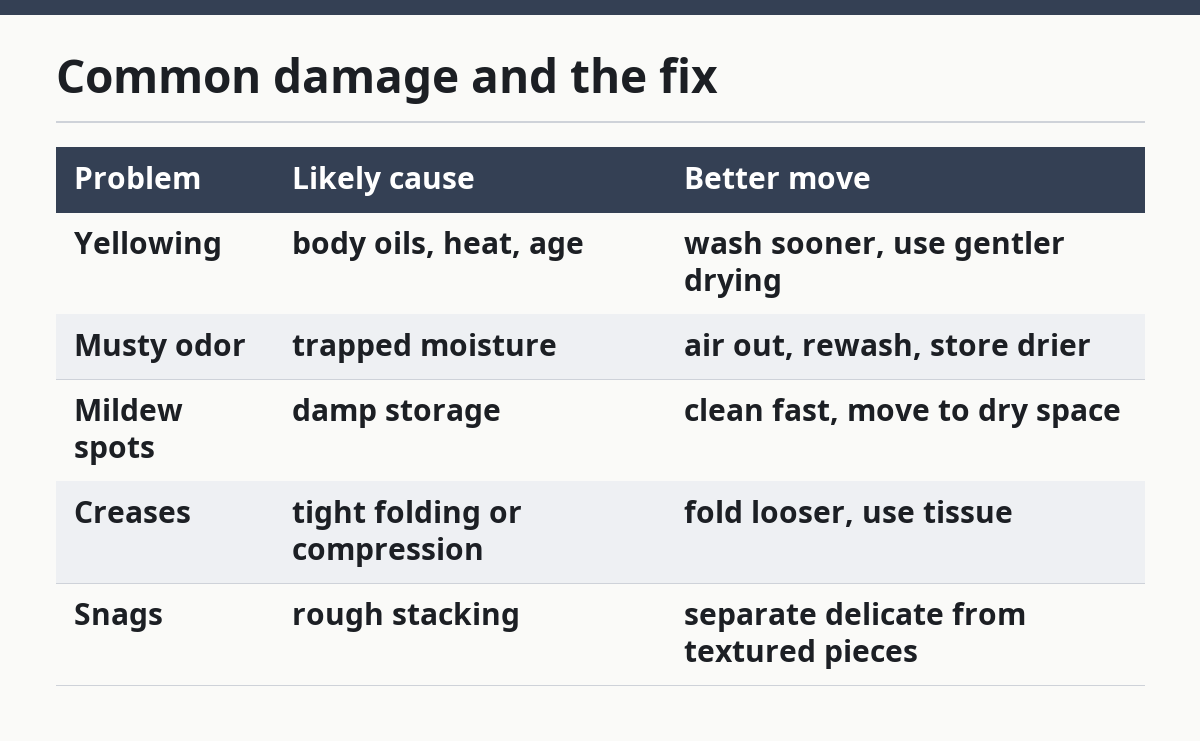
Common damage and the fix
| Problem | Likely cause | Better move |
|---|---|---|
| Yellowing | body oils, heat, age | wash sooner, use gentler drying |
| Musty odor | trapped moisture | air out, rewash, store drier |
| Mildew spots | damp storage | clean fast, move to dry space |
| Creases | tight folding or compression | fold looser, use tissue |
| Snags | rough stacking | separate delicate from textured pieces |
If a stored cover smells off but shows no visible mold, air it out first in a dry room. If odor stays, wash it before putting it back into rotation.
Don’t stuff and hope.
When should you hand wash, machine wash, or dry clean?
Machine wash is fine for many cotton covers, hand wash is safer for silk and delicate trims, and dry cleaning is the right call when the label says so or the structure is too fragile to wet clean. The decision is about fiber, construction, and decoration—not just convenience.
Here’s the blunt version: if a cover has beads, heavy embroidery, velvet pile, or a complex backing, home washing can do more harm than good.
Use the structure to guide the method.
A practical decision guide
- Machine wash: simple cotton, sturdy blends, most everyday covers.
- Hand wash: silk, delicate synthetics, thin decorative fabrics.
- Dry clean: wool, structured velvet, ornate trim, unknown delicate pieces.
- Spot clean: minor marks on fragile surfaces.
If the fabric is expensive-looking but the label is vague, treat it like a fragile item. That is safer than assuming it can take a full wash.
Assumption costs more.
Best cleaning habits by usage
- Daily-use covers: wash more often, dry fully, store in easy reach.
- Guest-room covers: inspect before storing and before use.
- Decor-only covers: dust and air out regularly.
- Child or pet areas: wash sooner, since stains set quickly.
A good system saves time later. A bad one creates a pile of covers that all need fixing at once.
What storage system fits your home and habits?
Choose the simplest system that matches your space, fabric types, and how often you switch covers. For most homes, that means a drawer for daily covers, a labeled bin for seasonal sets, and a separate breathable box for delicate pieces.
Three zones, not one.
If you hate folding, do not buy storage that demands museum-level neatness. If you own only a few covers, you do not need elaborate bins. The most reliable system is the one you will keep using for years, not the one that looks perfect on day one.
Match the system to the problem
- If you rotate weekly: use a drawer or shelf with dividers.
- If you rotate by season: use labeled bins.
- If you own delicate fabrics: use tissue, flat stacking, and low compression.
- If you live in humid weather: prioritize dry rooms and breathable containers.
You can keep this system cheap and effective with plain boxes, labels, and a clean shelf. No special gadget is required.
When to replace or retire a cover
Retire a cover when the fabric thins, seams fail, or stains stay after proper cleaning. A cover that no longer lies flat or keeps a clean finish is no longer worth storing.
The honest verdict on care and storage
Choose a drawer-and-bin system if you want the easiest balance of speed, protection, and visibility. Choose flat breathable storage if you own silk, velvet, embroidered, or seasonal covers that crease easily. Neither system helps if you store damp fabric or skip the care label.
That is the hard line.
The right setup is not fancy. It is consistent. Wash gently, dry completely, fold with care, and keep the fabric in a dry, labeled home. That keeps covers fresh, usable, and out of the junk pile.
Exception scenarios
- You have very few covers. A single clean drawer is enough; bins may be needless clutter.
- You live in a humid climate. Breathable storage and extra drying time matter more than neat stacking.
- Your covers have heavy trim or beadwork. Flat storage with tissue is safer than compression.
- You need ultra-fast swaps. Keep daily sets in the most accessible spot, even if seasonal storage is less elegant.
What should you do if a stored cover smells musty?
Air it out first, then wash it again if the odor remains. Musty smell usually means moisture got trapped during drying or storage, and a quick spray does not solve that. If the smell comes back after airing, the item needs a full cleaning cycle.
If the cover also has visible spots, treat it as a cleaning problem, not a storage problem.
Storage was just where it showed up.
What usually causes the smell
- Folding while still slightly damp
- Storing near a bathroom or basement wall
- Packing into plastic too early
- Stacking with already soiled fabric
A dry closet and a patient dry-down prevent most of this.
How often should pillow covers be cleaned?
Clean them on use, not on a calendar alone. Daily-use covers may need washing far more often than decorative covers, while seasonal pieces can go months between full cleanings if they are stored clean and dry. The right interval depends on sweat, oils, pets, smoke, and light color.
A white cotton cover on a bed needs different care than a decorative velvet cover on a shelf.
Same word, different job.
A simple rule of thumb
- Daily contact: clean often.
- Occasional use: inspect before storage and before display.
- Decor-only: dust, air, and wash when visibly dirty.
If you’re unsure, check for odor, discoloration, or stiffness. Those clues matter more than the date on a calendar.
FAQ
Can I store pillow covers in plastic bags?
You can, but it’s not the best default. Plastic traps moisture if the covers are not fully dry, and that can cause odor or mildew. Use plastic only for short-term protection in a dry room, and choose breathable storage for long-term keeping. The CDC and EPA both emphasize dry conditions when preventing indoor mold growth.
Should I iron pillow covers before storing them?
Yes, if the fabric allows it and you want crisp folds. Ironing can make storage neater, but it is not required for most covers. Skip high heat on silk, velvet, and decorated fabrics unless the care label says it is safe.
What is the safest way to store silk covers?
Store silk flat, clean, and fully dry in a breathable box or drawer with tissue between layers. Keep it away from sunlight and compression. Silk shows fold lines easily, so tight vacuum storage is a poor choice. Professional textile care guidance also recommends following the care label and avoiding unnecessary heat.
How do I keep covers fresh between uses?
Air them out in a dry room, brush off dust, and keep them out of humid spaces. If the fabric is washable, laundering before deep storage does more good than scent sprays. Freshness comes from clean fabric and dry storage, not perfume.
Do I need special storage products?
No. Clean bins, labeled boxes, tissue, and a dry shelf are usually enough. Special products can help with organization, but they are not required for good care. The biggest gains come from washing correctly and storing covers dry.
Drafted with AI; not yet reviewed by a person.
About the Author