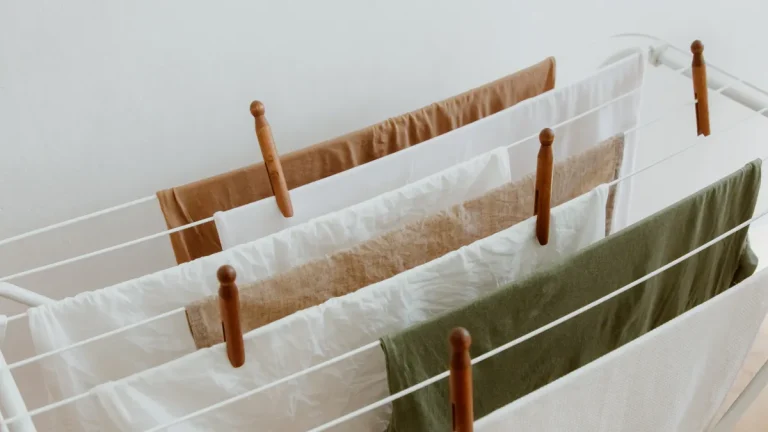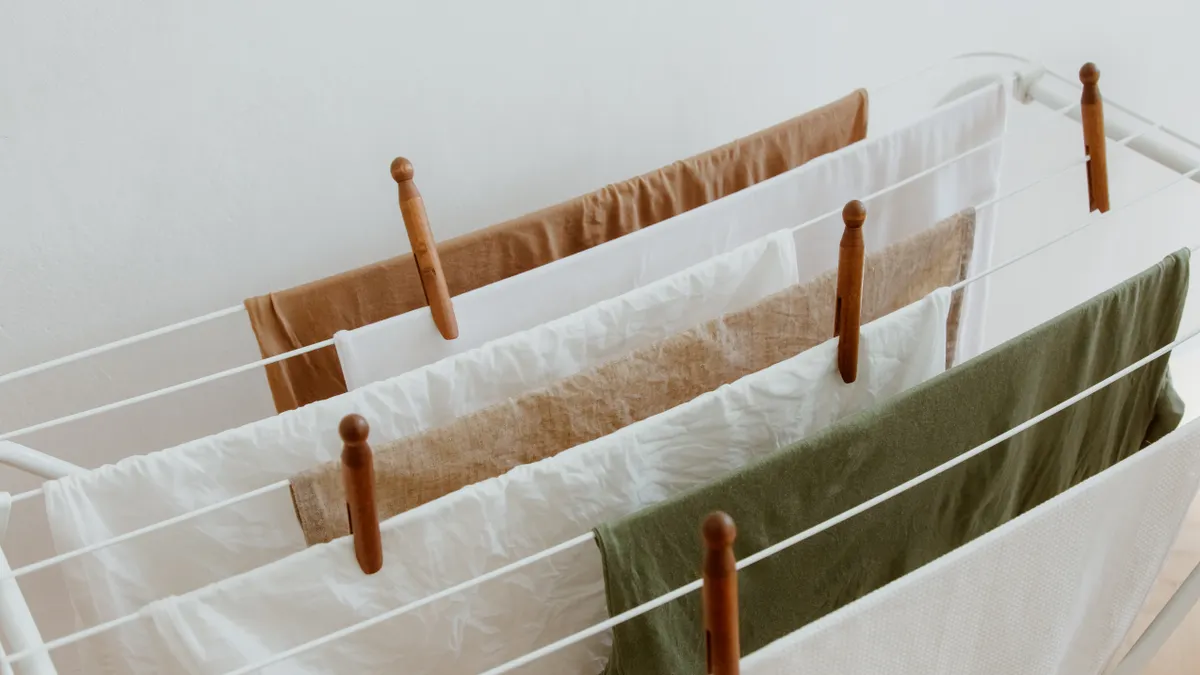
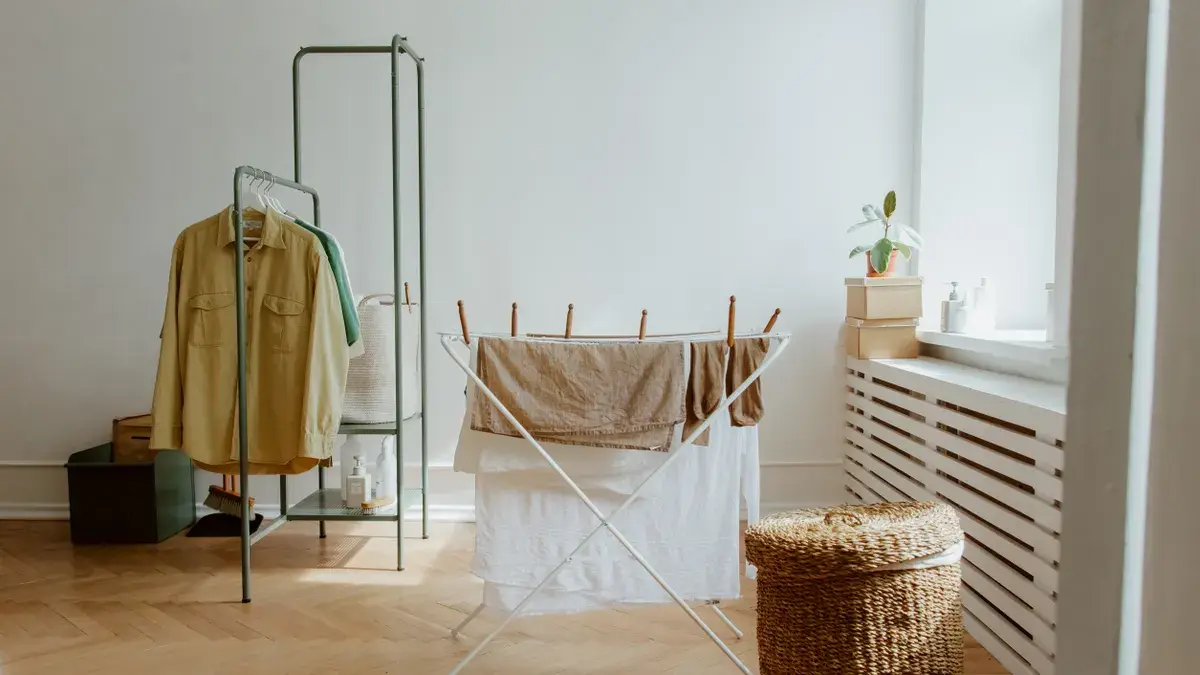
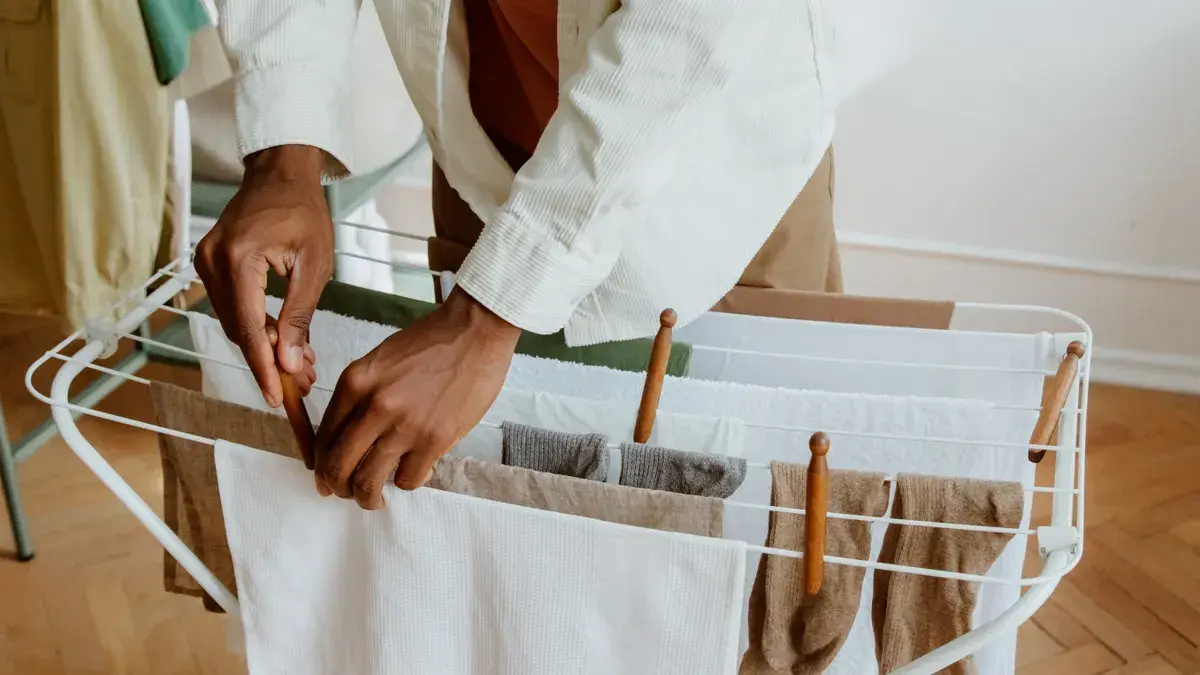
Laundry hanging neatly on an indoor drying rack
Last updated: November 19, 2026
Key Takeaways
- Aim for a neat, tucked-in look instead of a wrinkled square on the sofa.
- Air drying can give a sharper shape, while a dryer is faster.
- Keep covers spread out, flip them once, and remove them before they get stiff.
- Straighten seams while the fabric is still warm and slightly damp.
Pillow covers look limp after washing because heat, crowding, and rough handling bend the fibers. If you want to keep pillow covers crisp after washing and drying, reshape them flat, give the seams room, and stop the cycle before they bone-dry. The steps below show exactly how to do that with a drying rack, dryer balls, a flat drying surface, or a clothesline.
Keep pillow covers crisp after washing and drying
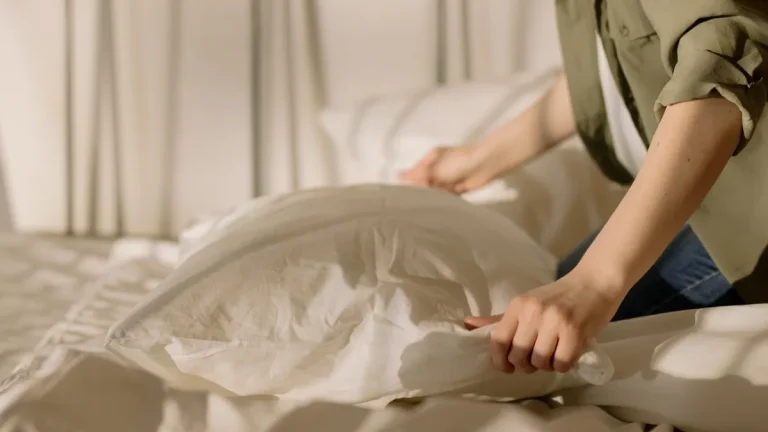
Picture this: you pull pillow covers from the dryer, and they look soft, curled at the edges, and a little twisted at the seams. You want a clean, tucked-in look, not a wrinkled square that fights you on the sofa.
The fix is shape, airflow, and timing. Crisp pillow covers dry best when the fabric lies flat, the seams are straight, and the last bit of moisture leaves slowly rather than in a blast of heat.
- Shake each pillow cover hard before drying so the fabric opens up and the seams stop folding inward.
- Smooth the corners with your hands and lay the cover flat for a minute on a towel or counter.
- Hang the cover on a clothesline or drying rack with the full edge supported, so gravity pulls wrinkles out.
- Add dryer balls only if you use a tumble dryer, because they help separate the fabric and reduce clumping.
- Remove the covers while they are still slightly damp, then finish drying flat on a clean surface for a sharper edge.
- Press the seams with your fingers before folding or reusing them, so the corners keep their square shape.
According to the American Cleaning Institute, following the care label and using the right drying method helps protect fabric shape. The last stretch of drying matters, too. A little moisture can help cotton and linen relax instead of setting into a hard crease. On the flip side, leaving pillow covers bunched in a basket after washing sets wrinkles fast.
Should pillow covers go in a dryer or on a line?
Both methods work, but air drying can give the crispest shape and a dryer gives the fastest finish. If you care most about sharp corners and fewer fold marks, a drying rack or clothesline usually wins. If you care most about speed, tumble dry on low and stop early.
A clothesline lets the fabric hang in its natural length. That helps long seam lines stay straight instead of folding over on themselves. A drying rack does something similar, but it gives more support if the cover is delicate or has buttons, ties, or a hidden zipper.
The dryer is not the enemy. The problem is over-drying. Once the fabric is fully dry and hot, the fibers stiffen into whatever shape they last touched.
- Use a clothesline for cotton or linen covers that wrinkle easily.
- Use a drying rack for covers that need a flat, supported finish.
- Use a dryer only when you need the job done fast and can watch the cycle.
- Skip high heat if the cover has embroidery, piping, or a decorative weave.
A useful rule is simple: if the cover already looks smooth after the spin cycle, air drying is the safer bet. If it comes out twisted and heavy, a short dryer session followed by flat drying usually works better.
How do you dry pillow covers without wrinkles?
You dry pillow covers without wrinkles by keeping them spread out, flipped once, and removed before they turn stiff. The wrinkle problem usually starts in the washer, then gets worse in the dryer when fabric sits folded over itself for 20 or 30 minutes.
Start with the spin cycle. A strong spin removes water, but it also packs fabric tight. Shake each cover open as soon as the wash ends. Straighten the side seams and pull the corners square. That small step saves more time than any fancy trick later.
Then choose one of two paths:
- Flat drying surface: Lay the cover flat on a dry towel or mesh surface, smooth it once, and let air move around it.
- Drying rack: Clip or drape it so the fabric hangs evenly and does not sag into a heap.
- Clothesline: Pin it by one edge, not by a corner, so the weight stays balanced.
- Tumble dryer: Use low heat, light load, and a short cycle, then remove early.
If you use a dryer, dryer balls help keep the covers from sticking to one another. They are not magic, but they do reduce the packed, folded look that turns into deep wrinkles. Two or three balls are usually enough for a small load.
The worst habit is tossing clean covers into a hamper “for a minute.” That minute can set folds into the fabric.
How do you reshape pillow covers after washing?
You reshape pillow covers after washing by straightening the seams while the fabric is still warm and slightly damp. That is the moment when cotton, linen, and many blends are easiest to coax back into a square.
Hold the cover by two opposite corners and snap it once or twice. Then run your fingers along each seam from end to end. If one side has curled inward, pull it gently until the edge looks straight again. The goal is not perfection; it is a clean, even outline.
If the cover has a hidden zipper, close it before reshaping. An open zipper can pull one side longer than the other and leave a crooked edge. If it has buttons or ties, fasten them before you dry it. Loose closures catch on themselves and distort the shape.
For stubborn corners, use this order:
- Pull the corner square with your fingertips.
- Flatten the seam allowance under the fabric.
- Lay the cover on a towel for 10 to 15 minutes.
- Flip it once if one side dries faster than the other.
That short pause matters. It lets the fabric settle before the fibers harden. If you want a crisp result, do not wait until the pillow cover is fully dry to reshape it. At that point, the wrinkle has already set.
What drying mistakes make pillow covers look soft and limp?
The drying mistakes that make pillow covers look soft and limp are overcrowding, overheating, and over-drying. Each one leaves the fabric less defined and more likely to curl at the edges.
Overcrowding is the easiest mistake to miss. If a full load of towels and bedding surrounds the pillow covers, they cannot tumble freely. They come out flattened in odd places and folded in others. Use a smaller load or dry the covers by themselves.
Overheating can make crisp fabric look tired. High heat drives out moisture too fast, which leaves the cloth stiff in some spots and relaxed in others. Low heat takes longer, but it keeps the fabric’s shape more evenly.
Over-drying is the biggest offender. A cover that stays in the dryer until it is completely bone-dry loses the little bit of moisture that helps the fibers relax into a clean line. That is why many people get better results by removing the covers while they are still slightly damp.
- Too many items: pillow covers get trapped under heavier laundry.
- Too much heat: seams curl and corners look pinched.
- Too long in the dryer: wrinkles lock in hard.
- No reshaping: the cover dries in whatever position it landed.
If you want a cleaner finish, treat the last part of the cycle as the most important part. That is where the shape is won or lost. If you are unsure about a fabric, check the care label or consult a textile professional.
What is the best setup for crisp pillow covers at home?
What is the best setup for crisp pillow covers at home depends on the fabric, the load size, and how much time you have. A drying rack, a flat drying surface, or a short low-heat dryer cycle can all work well.
For the sharpest result, use a drying rack near moving air. That gives the fabric room to dry without folding into itself. A flat drying surface works almost as well if you smooth the cover once and leave it alone. A clothesline is best when you want gravity to pull out the center wrinkles.
If you must use a dryer, keep the load small. Add dryer balls, choose low heat, and check the covers before the cycle ends. Pull them out while they still feel slightly cool in the middle. Then stretch the seams flat and let them finish on a clean surface.
This page sits inside the broader pillow cover care and maintenance guide, which covers the rest of the care routine. That matters because crisp drying is easier when washing, drying, and storage work together.
One more practical point: fabric type changes the result. Cotton and linen usually benefit from air drying or a short dryer finish. Thick decorative covers can hold wrinkles longer and may need a second pass on a rack. Synthetic blends may dry fast but can also keep a pressed-in fold if they sit in a heap.
The best part? You do not need special tools. A rack, a line, a towel, and a little patience usually do the job.
How do you keep pillow covers from wrinkling after washing?
You keep pillow covers from wrinkling after washing by shaking them out, drying them with space around the fabric, and removing them before they are fully bone-dry. Wrinkles set when the cover sits folded in a warm pile. A drying rack or clothesline helps because it lets air move through the cloth instead of trapping it in one shape.
Should pillow covers be removed from the dryer while damp?
Yes, pillow covers should usually be removed while slightly damp if you want a crisper finish. That small bit of moisture makes it easier to smooth seams and corners before the fabric hardens. Finish them flat on a clean surface, and you will usually get a cleaner edge than if you wait until the cycle is over.
How do you reshape pillow covers after washing?
You reshape pillow covers after washing by pulling the corners square, smoothing the seams, and letting them dry in a flat or evenly hung position. Do it while the fabric is still warm and a little damp. If you wait until the cover is fully dry, the wrinkles and twisted edges are harder to correct.
Drafted with AI; not yet reviewed by a person.
About the Author