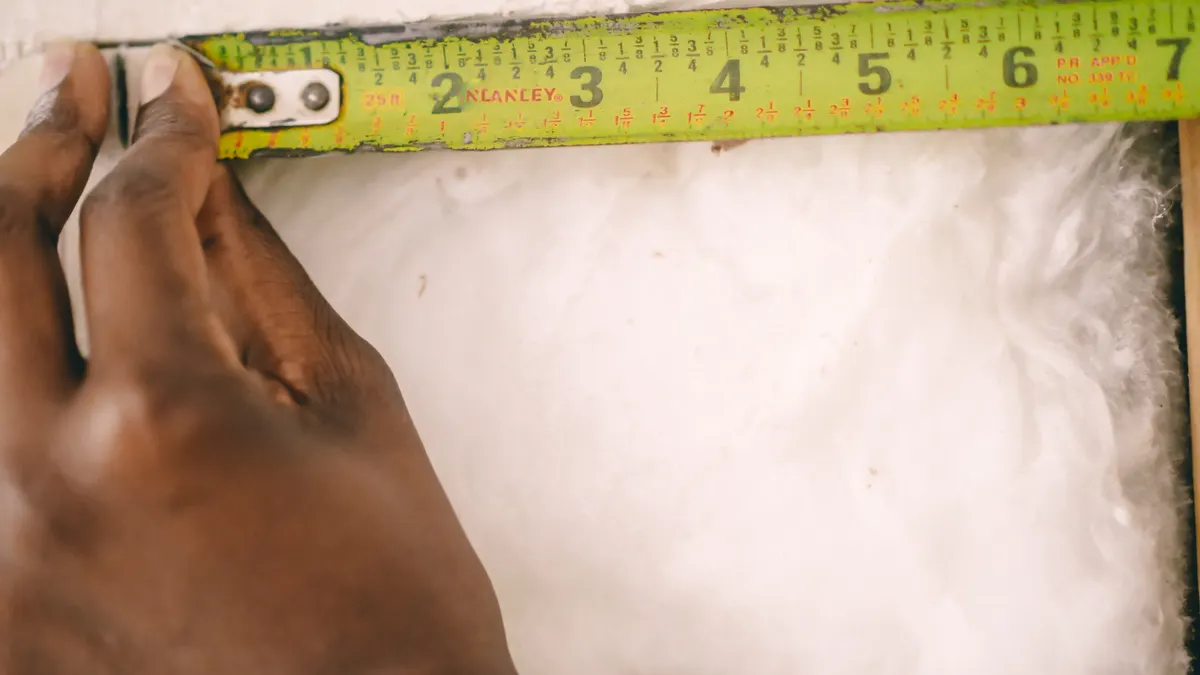
Hand measuring a pillow with a tape measure
Last updated: November 18, 2026
Key Takeaways
- An 18 x 18 label can still look off if the insert is same-sized, too thin, or too bulky.
- The best fit fills corners without straining seams.
- Fabric controls drape, friction, wrinkle resistance, and how much the cover conceals.
- The closure affects security, changeability, and how neat the back appears.
A bad fit makes a cover wrinkle, gape, or swallow the insert, while the right one gives the cushion shape, protects the fill, and looks finished on the sofa. Pillow cover fit, function, and presentation — The Complete Guide is simple: size the cover by the insert, not by wishful thinking, and choose the fabric for how you live, not just how it photographs. The sections below settle sizing, closure choice, fabric behavior, and the cleanest way to make it look intentional.
Why pillow cover fit matters more than the tag size
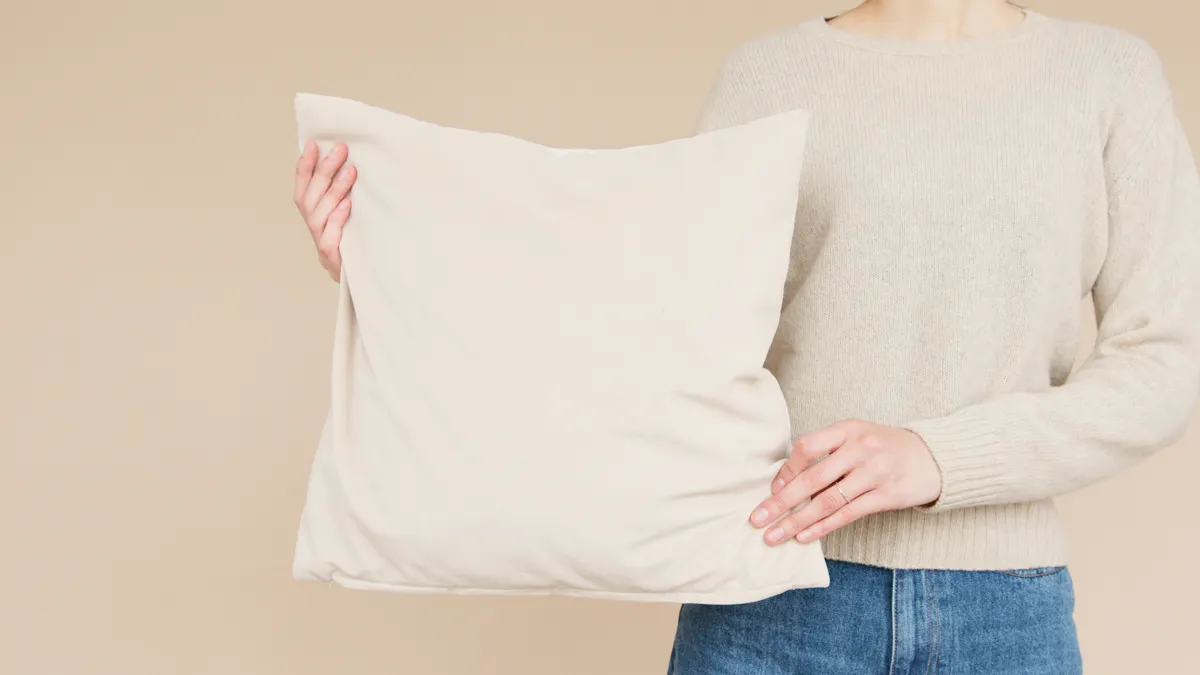
A cover that says 18 x 18 inches can still look wrong if the insert is the same size, too thin, or too bulky. The right fit comes from matching the insert to the cover’s real shape, the fabric’s give, and the way you want the front edge to sit. That is the difference between a flat square and a pillow that looks full, crisp, and expensive.
Here’s the catch: the tag size tells you the opening, not the final look. A cotton-linen blend with little stretch behaves differently from velvet or knit fabric, and a 20 x 20 cover can look limp with an 18 x 18 insert if the fill is soft. The usual rule is to size the insert a bit larger than the cover for a fuller face.
- Fuller look: insert slightly larger than cover
- Limp look: insert the same size as cover
- Overstuffed look: insert far larger than cover
A good fit also changes function. A snug cover holds the insert in place better on a bed or bench, while a looser one is easier to remove and wash. If the pillow gets handled a lot—kids, pets, naps, couch duty—fit affects both appearance and wear. A sloppy fit does not just look off. It wears off faster.
How to choose the right size without guessing
The right size is the one that lets the insert fill the corners without straining the seams. For square covers, a common starting point is an insert that is about 1 to 2 inches larger than the cover on each side, though the exact result depends on fill density and fabric thickness.
Picture this: you’re holding a 20 x 20 cover and trying to decide between a 20-inch insert and a 22-inch insert. The 20-inch insert will usually look flatter, especially in soft fill. The 22-inch insert is more likely to give a plump face with rounded corners, which is what most people want on a sofa or bed.
Use the shape of the finished room, not only the label.
- Measure the cover opening, not just the face. Zippers, flaps, and piping can change the usable space.
- Check the insert fill. Fill density changes how the cover sits and how much pressure it puts on the seams.
- Decide the final look. Tailored, relaxed, or overstuffed.
- Match the size to the setting. A decorative chair pillow can stay a touch looser than a main sofa pillow.
The truth is, most fit problems come from mixing up decorative sizing with functional sizing. A cover meant to look good on a styled bed may not feel good for daily lounging. If you want the cleanest result, buy the cover for the insert you plan to use, not the other way around. A 2-inch difference often matters more than the brand name.
What the fabric does to fit, comfort, and care

Fabric changes everything because it controls drape, friction, wrinkle resistance, and how much the cover hides or shows. A smooth weave will look sharper, while a textured or plush surface will soften the edges and make the pillow look thicker than it really is.
The choice depends on where the pillow lives. Cotton is easy to live with and usually simple to wash. Linen has a dry, relaxed look but wrinkles fast. Velvet reads richer and holds a strong shape, though it can show pressure marks and attract lint. Tighter weaves usually hold a cleaner line around the edges.
- Cotton: everyday use, easier care
- Linen: relaxed presentation, more visible creasing
- Velvet: richer look, more surface marks
- Knit or stretch fabrics: forgiving fit, less tailored look
According to textile and care guidance from the U.S. Federal Trade Commission and The Spruce, fabric content and care labels matter because different fibers and constructions wear and clean differently. Now, you might be wondering whether a certain fabric fixes a bad fit. It does not. A stretchy fabric can hide a size mismatch for a while, but it can also make the pillow look saggy if the insert is too small. A stiffer fabric can make a proper insert look neat, but it will also expose a weak insert faster.
Care matters too. If the cover will be washed often, check whether the closure can handle repeated opening and closing without snagging. A machine-washable cotton cover is practical for family rooms. A delicate woven cover may look great but belong in a lower-traffic spot. The best presentation is the one that survives real use.
Zipper, envelope, or tie: which closure works best?
The closure decides how secure the insert feels, how easy the cover is to change, and how clean the back looks. A zipper usually gives the tidiest shape and keeps the insert from shifting. An envelope closure is easier to remove and often feels softer at the seam. Ties can look casual or decorative, but they are less precise. If you are unsure about construction details, consult a professional upholsterer or seamstress before ordering a custom piece.
Zippered covers are the strongest choice when presentation matters most. They keep the opening flat and usually hide the insert better. The trade-off is that zippers can catch fabric, and a short zipper opening can make stuffing the insert annoying. Envelope covers are easier to manage, but the overlap can loosen with use and show more of the inner pillow over time.
Picture this: you’re changing a cover before guests arrive and trying not to wrestle a stiff insert through a tiny opening. A zipper wants a little more care but usually gives a cleaner front. An envelope style is quicker. Here is the practical split:
- Choose zipper for a crisp, polished look
- Choose envelope for easy removal and casual use
- Choose ties for decorative, low-precision styling
The closure also changes durability. A cheap zipper that snags on the edge defeats the point of a tidy cover. A weak seam at the overlap does the same. If the pillow will be opened weekly for washing, the closure should be as sturdy as the fabric itself.
The Honest Side-by-Side
The right choice is not the same for every room. If the goal is a polished room, the zipper usually wins. If the goal is easy wash-and-change use, the envelope style often makes more sense. The table below separates what actually changes the result.
| Criteria | Zippered Cover | Envelope Cover | Winner for [condition] |
|---|---|---|---|
| Front appearance | Cleaner edge, flatter back | Overlapping back can look softer | Zippered for formal display |
| Ease of removal | Slower if the zipper opening is short | Quick to pull off | Envelope for frequent washing |
| Insert security | Holds the insert more tightly | Can shift if the overlap is shallow | Zippered for high-traffic seating |
| Risk of snagging | Zipper teeth or pull can catch fabric | No zipper hardware | Envelope for delicate fabrics |
| Ease of stuffing | Can be awkward with bulky fill | Usually easier to insert the cushion | Envelope for large inserts |
| Look with a fuller insert | Holds a crisp shape well | May show looseness at the back | Zippered for tailored styling |
| Long-term wear | Hardware can fail if poorly made | Seams can widen with repeated use | Depends on construction quality |
| Best use case | Sofa, bed, shelf styling | Guest rooms, casual swaps | Match to how often you change it |
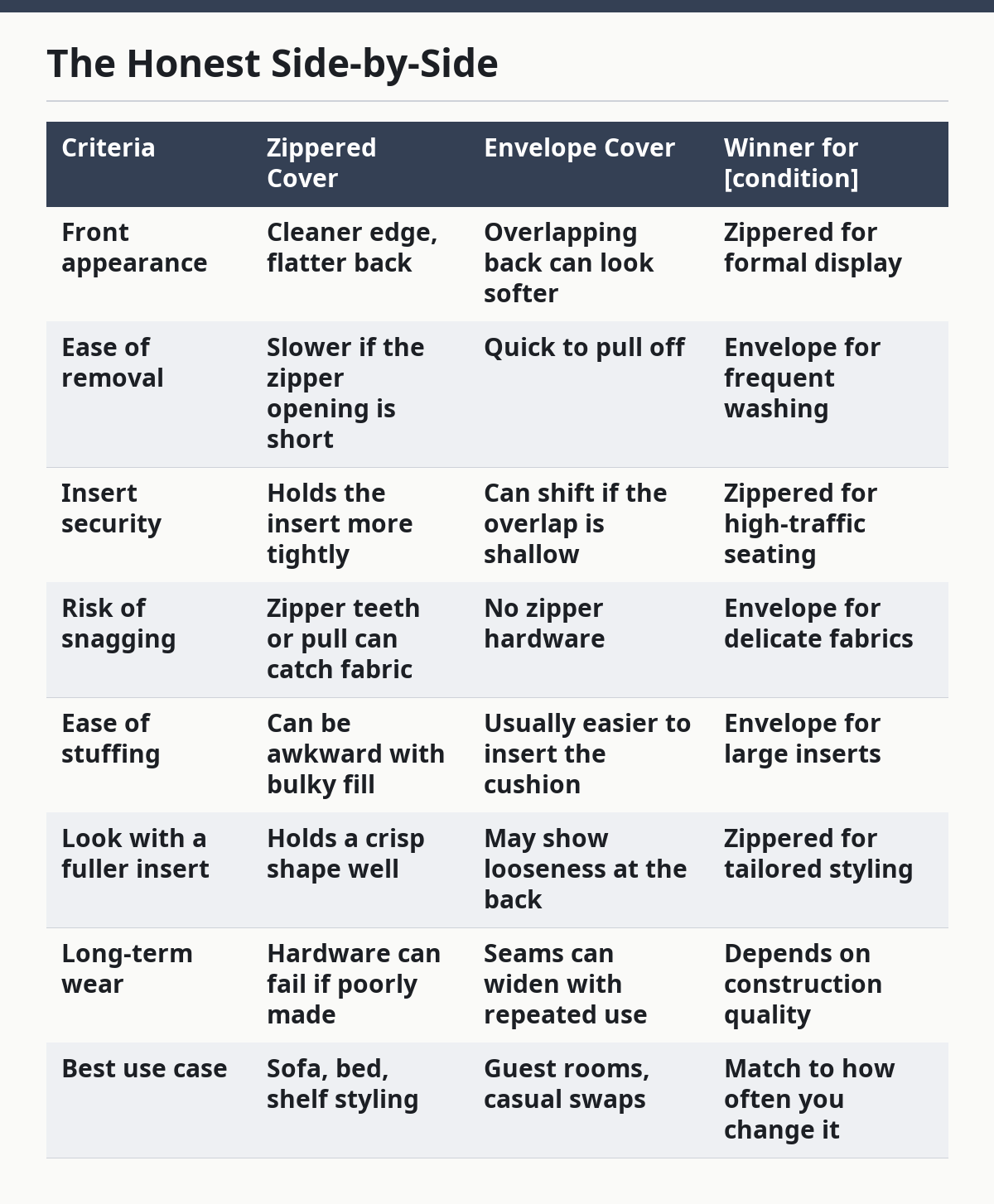
The table is blunt for a reason. A zippered cover is not automatically better; it is better when you want shape control. An envelope cover is not a downgrade; it is better when convenience matters more than a razor-clean back seam. The wrong choice is the one that fights your routine every week.
The specific situations where the better option flips
A standard zipper does not win every time, and a standard envelope does not lose every time. The choice flips when the pillow is used in a way that changes wear, cleanup, or the need for a sharp edge. That is where a generic decorating rule falls apart.
Picture this: you’re styling a room for guests, but the cushions also need to survive daily family use. In that case, a zippered cover usually wins on the main seating and an envelope cover can still make sense for a lower-contact accent pillow. The split can save time and money without making the whole room feel mismatched.
Here are the exceptions that matter most.
- You wash covers often. Envelope closures can be quicker to remove, especially when the fabric is machine-safe and the pillow comes off several times a month.
- The insert is oversized and stiff. A zipper opening may feel too tight, while an envelope back gives you more room to maneuver.
- The fabric is delicate. A zipper can snag fine weave or pile, so a flap back may be the safer choice.
- The look is meant to be casual. In that case, a softer back and slightly looser fit can look right instead of wrong.
Because of that, the best choice depends on whether the pillow is a main seating piece or a low-contact accent. A formal living room can use tighter fit and zipper closures, while a den or guest room can use easier, looser covers.
How to make a cover look intentional on a sofa or bed
A pillow looks finished when its corners stand up, its front surface sits smooth, and the insert does not drift to one side. The trick is not decoration. It is proportion. A well-filled cover with clean edges can do more for a room than a more expensive print.
Start with the insert shape. Square covers should have a square insert that reaches the corners instead of collapsing in the center. If the insert is too soft, the cover will wrinkle at the edges. If it is too large, the seams will bulge and the corners can look pinched. That is especially noticeable on 18 x 18 and 20 x 20 covers, the most common living-room sizes.
Picture this: you’re arranging three cushions across a couch and one of them looks sunken while the others stand proud. The issue is rarely the pattern. It is usually fill density, insert size, or a closure that sits crooked on the back. A neat front line matters more than matching every fabric texture in the room.
Use these presentation checks.
- Corners should fill out without stretching the seams
- Front surface should lie smooth with only light natural folds
- Back closure should sit flat so it does not twist the shape
- Group pillows by function so one odd pillow does not ruin the whole line
A cleaner presentation also comes from restraint. Too many mixed fabrics can make the grouping look scattered. Two or three coordinated textures usually read better than a dozen competing ones. The cover is the frame. The insert is the structure. Treat the cover and insert as part of the look, and consider how they work with the rest of the room.
What buyers often get wrong about fit and function
The most common mistake is assuming the cover size on the label tells the whole story. It does not. A 20 x 20 cover made of a thick weave may behave smaller than a 20 x 20 cover in a soft knit. A sewn edge, hidden zipper, or deeper seam allowance can all change the outcome.
Another mistake is choosing for appearance only. A pillow that looks perfect for one day can become annoying if it slips off the sofa, pills after a few washes, or shows every crease from use. A pretty cover with poor structure is a short-lived win. The same is true for a durable cover that looks boxy and flat in the room.
The truth is, function and presentation pull in different directions. A tight fit looks sharper. A looser fit is easier to handle. A smooth fabric photographs well. A textured fabric can forgive wrinkles and wear. That means the best choice is not the fanciest one. It is the one that matches the room’s job.
- High-use room: prioritize closure strength and easy care
- Formal room: prioritize shape and edge control
- Shared family space: prioritize washability and insert security
If you remember one thing, remember this: a pillow cover is not a sleeve. It is part of the structure that makes the insert look complete. Ignore the structure and the whole arrangement looks accidental.
The Verdict: which cover style fits which job
Choose a zippered cover if you want the sharpest shape, the most secure hold, and a cleaner look on a sofa, bed, or staged room. Choose an envelope cover if you change covers often, want faster removal, or need a softer back for casual use. Neither if the insert and cover size are so far apart that the pillow looks floppy or overstretched.
That call holds up best when the room gets real use. A formal space or a main seating area benefits from the crisper line of a zipper. A guest room, rental, or low-stakes accent piece can live happily with an envelope back. If the room needs frequent washing and a delicate fabric, the easier closure often wins.
What about fabric, fill, and size together?
They work as a set, not as separate choices. A fuller insert can sharpen the shape of a soft fabric, while a firmer weave can make a modest insert look better than it should. The safest starting point is to pick the cover style first, then size the insert to match the look you want.
If the fabric is thick, textured, or visually heavy, the pillow may need a firmer insert to keep it from looking crushed. If the fabric is light, smooth, or drapey, a slightly fuller insert can help it stand up. That is why one 18 x 18 cover can look polished and another can look tired, even when both are labeled the same.
- Dense fabric: often needs a firmer insert
- Light fabric: often needs a fuller insert
- Smooth finish: usually shows shape changes more clearly
The question is not only “Will it fit?” The better question is “Will it still look right after sitting on it for a week?” That is the test most buyers forget.
Does the cover change how the pillow feels to use?
Yes, because the cover changes friction, heat, and how easily the fill moves inside. A smooth cotton cover feels different from a plush velvet one, even if both are the same size. The cover can also make the cushion harder or easier to fluff, which matters on beds and couches that get used daily.
A tighter cover can make the pillow feel firmer because it keeps the fill compressed. A looser cover can feel softer, but it may also let the shape wander. That trade-off is the core of the subject: the same cushion can feel like two different products depending on the cover choice. There is no magic fix here. There is only the right fit for the job.
How to shop without getting tricked by the label
The label is a starting point, not proof. Some products list the face size, not the seam-to-seam measurement. Some show the cover size but leave out the closure length, the fabric weight, or the fill recommendation. Those missing details are often what decide whether the final result looks polished.
Look for the things that affect real use.
- Exact face size or finished size
- Closure type and how wide the opening is
- Fabric content and whether it has stretch
- Care method and whether the cover is washable
- Recommended insert size, if the maker gives one
If those details are missing, assume you will need a little trial and error. A cover that looks ideal in a product photo can still pull oddly at the seams if the insert is too small or too large. That is not a defect in decorating skill. It is the difference between marketing and construction.
FAQ
How tight should a pillow cover fit?
A pillow cover should fit snugly enough that the corners look full and the front surface stays smooth, but not so tightly that the seams strain. For many square covers, an insert that is slightly larger than the cover gives the cleanest look. If the fill is soft, the cover usually needs more help to keep its shape.
Is a zipper or envelope closure better?
A zipper is better when you want the cleanest shape and the most secure hold. An envelope closure is better when you want quicker removal and a softer back. The right choice depends on how often the cover gets washed and how polished you want the finished look to be.
Why does my cover look baggy even though the size matches?
It usually looks baggy because the insert is too soft, too thin, or not large enough for the cover’s depth. The fabric can also play a part: a looser weave or stretch material shows slack more easily. A size label alone will not solve a poor fit.
Can I use the same insert in different covers?
Yes, if the covers are close in size and the insert has enough loft to fill each one properly. The result will change from cover to cover because fabric and closure type change the shape. A single insert may work, but it may not make every cover look equally finished.
What makes a pillow look more expensive?
A crisp fit, full corners, and a closure that disappears into the back make the biggest difference. A cover that lies flat without puckers usually looks better than one with a flashy print but weak structure. Shape control beats novelty almost every time.
Drafted with AI; not yet reviewed by a person.
About the Author